






 Settings
 Fast Delivery
 Free Shipping
 Incoterms
 Payment Types


 Marketplace Product

Real-Time IoT Smart Energy Meter with SMS Alerts
2026-02-03 | By Rinme Tom
License: General Public License Breadboards Jumper Wires Arduino ESP32
📘 Summary
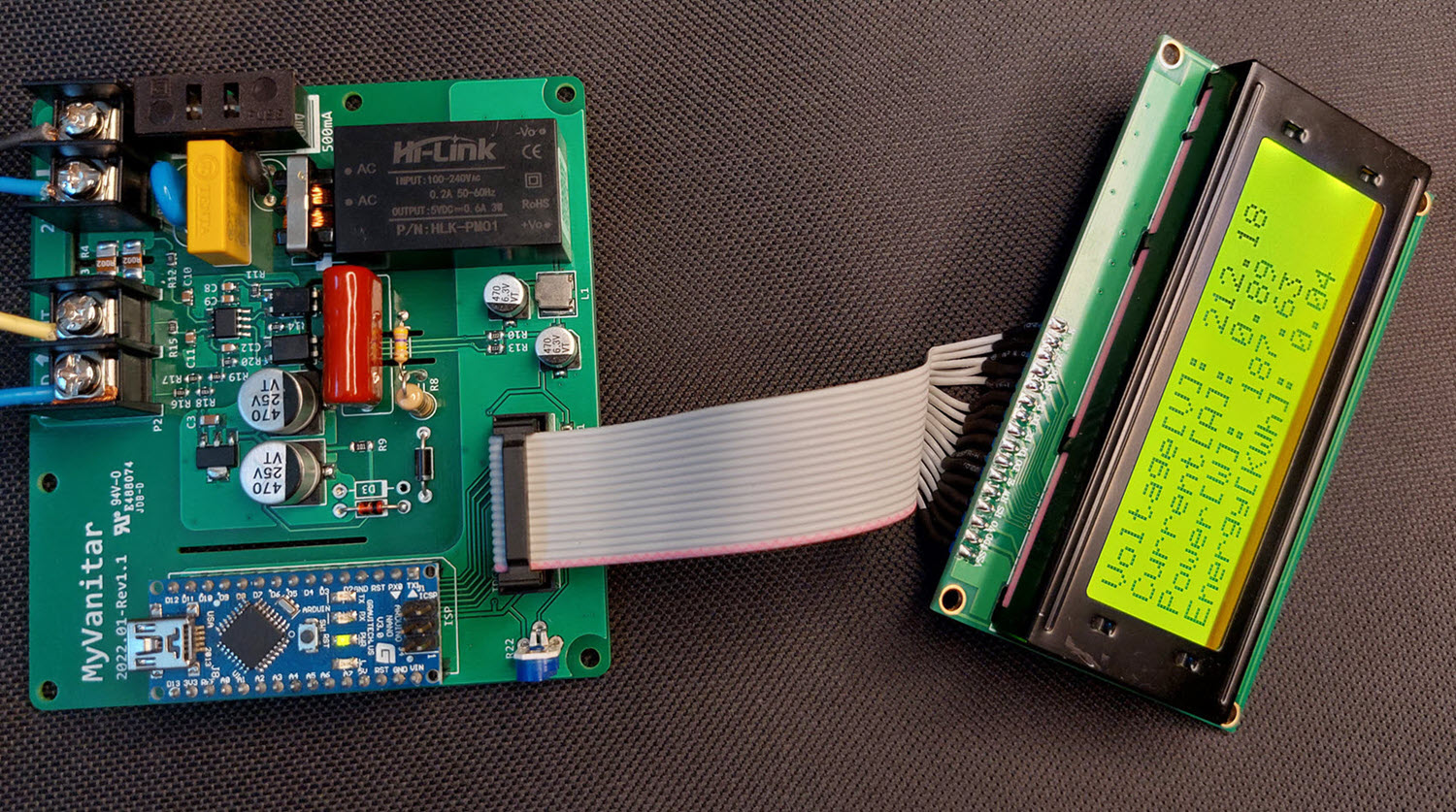
In this Maker project, you’ll build a Smart Energy Meter using IoT and an ESP32 microcontroller and a PZEM-004T energy sensor to monitor electrical parameters like voltage, current, power, power factor, and energy consumption in real time. Data is transmitted to a cloud dashboard via MQTT, and critical electrical anomalies trigger automated SMS alerts — providing safer, smarter energy monitoring for residential, commercial, and industrial applications.
🧠 Why This Project Matters
Traditional energy meters only record total usage and require physical readouts. With this IoT smart energy meter, you can:
Track power usage remotely from anywhere with internet access.
Visualize data live on an MQTT web dashboard.
Receive SMS alerts for abnormal electrical conditions like over-voltage or excessive current.
Use the system as a foundation for advanced automation (e.g., load control, efficiency reporting).
📊 How It Works: System Architecture
This IoT smart energy meter combines local measurement, cloud publishing, and alerting:
🧩 Core Flow
Measurement:
The PZEM-004T measures electrical parameters using internal sensors and a current transformer (CT clamp).Processing:
The ESP32 reads PZEM data over UART (Modbus Protocol), formats it, and prepares it for transmission.Remote Publishing:
Data is sent via Wi-Fi to an MQTT broker and displayed on a remote dashboard in real time.Alerts:
When predefined thresholds (e.g., high voltage) are exceeded, an SMS alert is sent using a cloud API.
📈 Real-Time Dashboard
A lightweight web dashboard visualizes:
Voltage (V)
Current (A)
Active Power (W)
Cumulative Energy (kWh)
Frequency (Hz)
Power Factor
It connects to the MQTT broker using WebSockets and updates values instantly as new data arrives.
📱 SMS Alerts: Stay Notified
This project integrates with a free SMS API via a cloud service so that when thresholds like over-voltage or overload are detected, the registered mobile number receives an automated alert. The system checks conditions in the ESP32 code and only sends messages when necessary to avoid spam.
⚡ Practical Use-Cases
This IoT smart energy meter is ideal for:
✔ Real-time home energy monitoring
✔ Safety alerts for faulty wiring or dangerous conditions
✔ Remote power management for vacation homes or remote installations
✔ Base for smart home automation integrations (e.g., Home Assistant, Node-RED)
🔍 Tips for Success
Ensure the CT clamp only encircles the live conductor — not both live and neutral.
Validate I2C addresses if the LCD shows no output (commonly 0x27 or 0x3F).
Use a secure MQTT broker if deploying in a production environment.
🏁 Conclusion
This project combines embedded systems, IoT communication, and real-time alerting into an accessible smart energy meter solution. With just a few components and open tools like the Arduino IDE and MQTT, you can transform raw electrical data into meaningful insights and actionable alerts — empowering smarter, safer energy usage.









 Slovakia